Climate Change & Biodiversity
Conservation Biology
Class Meetings
Dates: 2026-11-09T16:00:00, 2026-11-11T16:00:00
Assigned Background
Climate Change
Chapter: Climate Change
Ch No.: 8 (Threats to Biodiversity)
Pages: 153-162 (Climate Change & Biodiversity)
PDF: lovejoy_2010.pdf
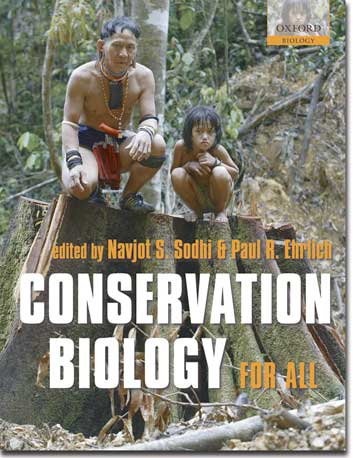
Textbook: Conservation biology for all (see details below)
Days Covered: BIOL4120_W11D1, BIOL4120_W11D2, BIOL4120_W12D1
Text: Conservation biology for all by Thomas E. Lovejoy
Edition: (2010)
ISBN: 978-0-19-955423-2 978-0-19-955424-9
Optional Material (Dive Deeper)
Readings
Ch 12 Climate Change
Textbook: Conservation Biology (see details below)
Chapter: 12 (Threats to Biodiversity)
Sections Assigned: 12.1, 12.2, 12.3, 12.4 (Climate Change & Biodiversity)
Days Covered: BIOL4120_W11D1
Text: Conservation Biology by
Edition: 2nd (2025-01-17)
ISBN: 9780197667033 (textbook)

Climate Change
Chapter: Climate Change
Ch No.: 8 (Threats to Biodiversity)
Pages: 153-162 (Climate Change & Biodiversity)
PDF: lovejoy_2010.pdf
Textbook: Conservation biology for all (see details below)
Days Covered: BIOL4120_W11D1, BIOL4120_W11D2, BIOL4120_W12D1
Text: Conservation biology for all by Thomas E. Lovejoy
Edition: (2010)
ISBN: 978-0-19-955423-2 978-0-19-955424-9
Video Clips
Are We Living In the Sixth Extinction
Be Smart, 11 17, 2014
Video (9:11)
Description
This time, we’re the asteroid.
Viewers like you help make PBS (Thank you 😃) . Support your local PBS Member Station here: https://to.pbs.org/PBSDSDonate
Subscribe to It’s Okay To Be Smart: http://bit.ly/iotbs_sub
Read “The Sixth Extinction by Elizabeth Kolbert: http://amzn.to/1xGKn0K
Rodolfo Dirzo et al. “Defaunation in the Anthropocene” http://bit.ly/1H7JQdw
Stuart Pimm et al. “Biodiversity of Species and Their Rates of Extinction” http://bit.ly/1A5UZJM
Get to know an endangered species: http://discover.iucnredlist.org/
Half of world’s wildlife has died off in past 40 years: http://bit.ly/1BHl8jR
Have an idea for an episode or an amazing science question you want answered? Leave a comment below!
Produced for PBS Digital Studios
Joe Hanson - Host/Writer
Joe Nicolosi - Director
Amanda Fox - Producer, Spotzen Inc
Kate Eads - Associate Producer
Katie Graham - Director of Photography
Andrew Matthews - Editing/Motion Graphics
Dalton Allen - Post-production intern
John Knudsen - Gaffer
Theme music:
“Ouroboros” by Kevin MacLeod
Stock images by Shutterstock
Join us on Patreon!
https://patreon.com/itsokaytobesmart
http://www.twitter.com/DrJoeHanson
http://www.twitter.com/okaytobesmart
http://www.instagram.com/DrJoeHanson
http://www.instagram.com/okaytobesmart
Merch
https://store.dftba.com/collections/its-okay-to-be-smart
https://www.facebook.com/itsokaytobesmartpbs/
Transcript
The history of extinction
0:02 · [MUSIC] The California Golden Bear The Great Auk The Passenger pigeon The Tasmanian tiger The Pinta Island tortoise The Golden toad All dead. And the killer is right there in the room with you.
0:22 · [MUSIC] The walls of France’s Lascaux cave hold some of humankind’s earliest art, almost mythical species: a wooly rhinoceros, enormous-antlered Megaloceros elk and massive aurochs. The artists lived on, became us, but those cave walls are the last place that those animals still run. They’re gone. Extinct.
0:51 · We all pretty much understand extinction, it’s when a species kicks the proverbial bucket, it rides off into the great biological sunset, bites the dust from whence it came and shall return, which is all just a pretty way of saying that every last one of them dies.
1:05 · Even kids are used to the idea that sometimes groups of living things just… don’t exist anymore. Okay, mostly don’t exist.
Discovering mass events
1:13 · But extinction, as a thing, is a surprisingly new concept. In the 1790’s, by studying various fossils, naturalist Georges Cuvier was the first to show that they were not from living, yet undiscovered creatures, as many thought, but from what he called “lost species”.
1:29 · In the decades to come, scientists like Charles Lyell and ol’ Chuck Darwin began to popularize the idea that Earth’s processes, like geology, evolution, and even extinction, did occur, just very, very, verrrry slowly. So slowly that we’d surely never actually see something go extinct. The idea of so-called catastrophic change was just impossible… It wasn’t until the 1980’s that scientists were able to shake that idea. Geologist Walter Alvarez was puzzled by the sudden disappearance of tiny aquatic fossils between two rock layers that dated from about 66 million years ago, the same age as the last dinosaurs.
2:01 · With the help of his Nobel Prize winning father, he analyzed the chemistry of that boundary and found iridium levels that were off the charts. Now, there’s usually not much iridium in Earth’s crust, but it’s very common in asteroids. So Alvarez’s theory? A 10-km wide rock collided with Earth, wiping out 75% of Earth’s plants and animals. To be honest scientists kinda laughed at it… until the 1991 discovery of the Chicxulub crater near the Yucatan peninsula finally settled it.
2:36 · Everything alive today is a descendent of a survivor of that terrible, horrible, no good, very bad day, the so-called Cretaceous-Paleogene mass extinction event, the most recent of the Big 5.
The big five extinctions
2:50 · You should feel pretty lucky. When we look at all of Earth’s fossil record together, 98% of the species that have ever lived are extinct,. Only they haven’t always disappeared at a constant rate.
3:02 · In the history of life on Earth, we know of 5 different mass extinctions, when a majority of life on Earth at the time disappeared in the blink of a geologic eye.
3:13 · Besides the most recent dino-killer, there’s the Triassic-Jurassic, Late Devonian, Ordivician-Silurian, and the worst of all, the End Permian. This was the mother of mass extinctions, it wiped out as many as 96% of Earth’s species, so it got the best nickname: The Great Dying.
3:34 · We’ve learned about all these just in time to get some bad news: We are in the 6th mass extinction, and this time, we are the asteroid.
The sixth mass extinction
3:46 · The hard facts of life mean that even when things are going pretty well on Earth, there’s a background rate of extinction. Among mammals, for instance, we’d expect to see one species go extinct every 700 years, or maybe one amphibian every thousand years.
4:00 · Studies of current extinction rates say we’re roughly one thousand times past that, and in some groups, like amphibians, are disappearing forty-five thousand times faster than normal.
4:13 · And since there are so many species still unknown or uncharacterized, all of those numbers are probably underestimates.
4:19 · Goodbye, gastric brooding frog, Pyrenean ibex, the Fomosan clouded leopard. We could have been friends.
4:29 · So how do we know we’re to blame?
4:32 · Around 13,000 years ago, as Earth thawed from its most recent big freeze, all of our favorite weird megafauna like the wooly mammoth, Smilodon, and our old friend Megatherium disappeared from the Earth, thanks to a changing climate and the invention of sharp stabby hunting tools. I really wish we had saved the 8-foot long beaver though. That would be awesome.
4:53 · Along the way, through hunting and farming, humans have been altering ecosystems in small but significant ways, but since the Industrial Revolution, man we have really kicked it into overdrive.
5:05 · With the exception of maybe the first bacteria to breathe oxygen into the air, no living thing has ever altered life on Earth to the degree that we have, which is why scientists now refer to current epoch as the Anthropocene.
Drivers of species loss
5:18 · “We are the ultimate problem. There are 7 billion people on the planet, we tend to destroy critical habitats where species live, we tend to be warming the planet, we tend to be very careless about moving species around the planet.”
5:32 · According to a 2014 paper by Stuart Pimm in Science (link in the doobly do), the main cause of the current extinction is human population growth and increased consumption. But those two things lead to a whole mess of threats: The most obvious are climate change and habitat destruction. Scientists found that most land species have very small ranges, so they can’t just pack up and move when we cut down their forest or turn it into a desert.
5:55 · Ocean species have more freedom to move to better waters, unless they’re coral reefs, but thanks to the highest atmospheric CO2 concentrations in 800,000+ years turning the oceans more acidic, anything with a calcium based shell has nowhere to run… or swim. If current trends hold up and the ocean hits pH 7.8 by end of century, it could wipe out ⅓ of the species in the ocean.
6:23 · Then there’s the invaders! Thanks to a species of snake hitching a ride on military cargo in the 1940s, Guam has lost all of its native birds. “I have had it with these (invasive) snakes on this (Guam-bound cargo) plane” In Africa’s Lake Victoria, 100s of species of cichlid fish species vanished after fishermen introduced the Nile Perch. Go us! We’re erasing species faster than we can even name them.
6:50 · Stanford’s Rodolfo Dirzo says that in the past 40 years, invertebrate populations, which might make up 97% of species on Earth, have declined 45% worldwide, and that’s just the ones we know about. (Link in the doobly do to that one too) You have to feel worst for the amphibians. Over the past 350 million years, they’ve survived multiple mass extinctions, but this time we’re giving them all we’ve got.
7:17 · Dirzo gives this loss of animal life a rather harmless sounding name: Defaunation. But there is nothing cute about it. There is not a group of living things on Earth today that is not threatened by the current and coming extinction. That includes us.
Why saving species matters
7:34 · Extinction is about more than gorillas, tigers, polar bears, and rhinos, and the dozens of other “famous” or “charismatic” species out there. Those are all important and worth saving, but we need to care just as much about the humble beetles, the ugly little worms, and the slimy frogs.
7:52 · Every species, big or small, panda or protozoa, is important and worth saving, whether or not we understand exactly why it’s worth saving.
8:02 · John Muir once said, “When we try to pick out anything by itself we find that it is bound fast by a thousand invisible cords that cannot be broken, to everything in the universe.”
8:15 · I’ve put some links down in the description where you can get to know some of Earth’s less-loved endangered species. Go make friends with one.
8:23 · Our knowledge and understanding of the planet’s ecosystems may be incomplete, but our effect on them knows no bounds. I hope the same tools and technology that we’ve used to push life on Earth to the edge might also give us power to bring ‘em back.
8:39 · So what are we gonna do? Let’s talk about it down there.
8:43 · Stay curious.
8:44 · If you want to read more about the brilliant and tragic stories of extinction in this age of humans, check out “The Sixth Extinction” by Elizabeth Kolbert, link in the description.
Climate change can money stop deforestation
The Economist, 11 01, 2022
Video (12:50)
Description
Rampant deforestation has driven economic growth, but accelerates climate change. How do you put a price on trees, to make them worth more alive than dead?
Film supported by Bain and Company
00:00 - Can money grow on trees?
00:55 - What Costa Rica can teach us
01:52 - Down with the trees: rapid deforestation around the world
03:15 - Why tree-planting schemes aren’t always the answer
04:24 - Paying for existing trees: carbon credits
06:38 - How to finance the restoration of forests
08:10 - What are Payments for Environmental Services?
09:31 - Swapping to sustainable returns
10:40 - Is focusing on economic growth the problem?
11.50 - Why world leaders need to decarbonise the economy
Sign up to our daily newsletter to keep up to date: https://econ.st/3n3kIjj
Why tree planting alone is not an adequate solution for climate change: https://econ.st/3rC50Oq
How the world’s wealthiest countries cause deforestation in poor ones: https://econ.st/3rBgW3d
The role of forests in climate change - listen to The Economist’s Intelligence podcast about their importance: https://econ.st/3rJ527a
How Jair Bolsonaro has damaged the Amazon rainforest: https://econ.st/3CFQiwa
Sign up to our climate change newsletter: https://econ.st/3b1dtCQ
A balance-sheet could help to save the planet:https://econ.st/3VcAZSS
Why is the Amazon rainforest doing more harm than good? https://econ.st/3T50KCV
Transcript
Can money grow on trees?
0:00 · [Music] money doesn’t grow on trees but chopping them down has helped lots of the world get richer since the beginning of the 20th century humans have been raiding these resources almost as though they were Limitless the problem is the world is now paying a heavy environmental price it certainly looks like a crisis after the worst drought in 80 years so is
0:26 · there a financial solution if we don’t change the movement of money we’ll continue to finance ourselves into Extinction is paying for trees to be protected and restored the answer and how do you put a price on their worth foreign
0:51 · to understand the alarming story of deforestation let’s start with Costa Rica in the 1980s [Music] Maria’s family was typical of many enticed by The Riches of Agriculture her father cleared and converted their Forest to pasture foreign
What Costa Rica can teach us
1:29 · markets with the driving force behind deforestation from 1940 to 1987 the proportion of land in Costa Rica covered by forests plummeted from 75 percent to 21 percent
1:45 · Costa Rica’s experience is far from unique the rest of the world jumped on the bandwagon too humans have been cutting trees for thousands of years but there was a massive acceleration in the last century the U.N estimates around 10 million
Down with the trees: rapid deforestation around the world
2:01 · hectares of forest are being lost each year that’s around 27 football fields every minute fewer trees means less carbon dioxide being absorbed from the atmosphere and their destruction only adds more emissions accelerating climate change
2:24 · The Heart Of This Global crisis sits the world’s largest rainforest and the so-called Trump of the tropics jair bolsonaro um from 2019 to 2022 the rate of
2:41 · deforestation in Brazil Rose by roughly 50 percent attracting critics around the world the problem is it’s a bit Rich for wealthy countries to demand that poorer ones give up the economic benefits of deforestation the majority of deforestation in recent
2:59 · years has really been driven by agriculture expansion in developing countries it can almost seem hypocritical to criticize these developing nations for following a pathway that effectively made rich countries wealthy in previous centuries
Why tree-planting schemes aren’t always the answer
3:15 · so what can be done the simple answer is for rich countries to incentivize poorer ones to protect and restore their forests one thing the wealthy world has tried is stumping up cash for new tree planting schemes but many of these haven’t borne
3:33 · fruit tree planting programs are incredibly popular they can seem almost childishly easy you plant a tree you save the climate the reality of course is nowhere near that simple in terms of the climate it can be far more beneficial to conserve the forest that’s there so another way is to focus rewards for
3:55 · developing countries on conserving existing forests it works like this using historic rates of deforestation a country predicts how much Forest is likely to lose in the future any Forest that it manages to conserve is judged against this Benchmark the
4:12 · donor hands over a financial reward to the developing country for the trees it saved paying a sum for each ton of carbon dioxide that would have otherwise been emitted it’s not just the developing country that stands to gain the donors often
Paying for existing trees: carbon credits
4:28 · rich countries or companies can benefit too in exchange for their money they can claim what’s called a carbon credit which they can use to offset their emissions elsewhere Carmen credits are a way of allowing companies countries people who can’t
4:47 · reduce their own emissions currently to offset those emissions elsewhere they are seen as an important part of transitioning towards a net zero economy I started out hugging orangutans but now I find myself hugging asset managers and bankers a bit more often Andrew Mitchell is a zoologist turned financial advisor he encourages investors to buy carbon credits and believes they’re an important tool for Forest conservation these credits are hugely valuable it’s a
5:18 · transition strategy whilst you’re reducing your carbon emissions you have to buy offsets you should buy offsets it sounds like a win-win but so far the results are mixed Shady players have gained the system and pulled dirty tricks like duplicating credits or
5:36 · claiming to conserve land never under threat or moving the problem to the forest next door built into the Paris agreement is this consensus that there should be a global scheme for exchanging carbon credits across borders in practice the rules and standards that would govern such a global market have been incredibly difficult to establish and so right now
6:01 · what we’ve got is a system which is really unregulated and although standards and the scale of carbon credit schemes are improving there’s still one big sticking point the rewards for conserving trees still lag behind those for deforesting we need carbon markets to grow they
6:22 · won’t really achieve their full potential unless the price of offsetting a ton of carbon is competitive with the profits that can be generated from other activities on that land ultimately conservation has to become profitable
How to finance the restoration of forests
6:38 · re-enter Costa Rica once the poster child of deforestation but now a global leader in conservation and an example of how to make saving nature pay here landowners are paid by the government to restore and conserve forests and this has helped to create new and sustainable economic opportunities [Music]
7:07 · remember Maria whose father made a living out of chopping down trees like many in Costa Rica her family have since branched out and now do the very opposite [Music]
7:24 · Maria and her grandchildren we plant forests so far 350 hectares worth the government pays them and many other families around 80 a year for each hectare of forest that’s restored or kept intact Graces
7:55 · Ramos [Music] it might sound like a government subsidy scheme but here’s the key bit it’s not
What are Payments for Environmental Services?
8:12 · it’s a system known as payments for Environmental Services launched in the late 90s is paid for by citizens who are seen as benefiting from the services provided by healthy forests like carbon storage the protection of vital food chains and clean water the money is not coming from from the national budget the money comes from those who benefit
8:38 · Carlos Manuel Rodriguez is Costa Rica’s former environment Minister and the brains behind the scheme which is paid for by a levy on consumers water bills and attacks on their fuel use Costa Rica was the first developing country that put a tax on on carbon to
8:56 · generate a revenue for the payment of Environmental Services everybody who uses fuel in Costa Rica and pollutes the environment contributing to climate change must pay in the price of purchases that fuel an extra amount that
9:13 · goes to this foreign fund that pays Farmers so far the scheme has invested more than 500 million dollars in the conservation of forests and it’s paid off in the space of a generation Forest covering Costa Rica jumped from 21 to more than 50 percent
Swapping to sustainable returns
9:32 · with the restoration of trees have come new opportunities for profitable and sustainable Industries blowing away the idea that conservation and economic development are always at loggerheads nature-based tourism has become naturally important because of our jobs in rural Costa Rica as opposed to what we had in the past which was this irrational unsustainable agricultural production there is no dichotomy between preservation and economic development
10:05 · since 1987 the peak of deforestation in Costa Rica the country’s GDP has risen by an average of 4.2 percent a year Costa Rica isn’t a magic formula for saving the world’s forests since it began prioritizing conservation it’s increased food imports an option not available to all countries but there is a lot Costa Rica can teach others for one thing it’s improved some
10:32 · of its bad spending habits reversing subsidies that incentivize the clearance of land at all costs a lead more countries should follow we should put more money into the protection of nature from governments but the reality is even if we doubled all that money it wouldn’t come close to beating the subsidies that
Is focusing on economic growth the problem?
10:52 · directly cause harm to Nature each year the world spends around 150 billion dollars on protecting nature but around 12 times that on subsidies that harm it some campaigners argue a more radical fix is needed to save the volume of forests necessary to avert environmental catastrophe they say what’s required is a fundamental shift away from society’s focus on profits and growth the problem
11:20 · with GDP is that it measures everything we build and nothing that we protect it’s all beginning to change now people are waking up to the importance of keeping nature going to keep our economy going not everyone supports such a drastic change to economic thinking but
11:36 · most do agree that change is not happening fast enough with the eyes of many global leaders on other challenges the world is facing multiple crises in the midst of all this there is a risk that nature conservation and the climate crisis are demoted in the pecking order but climate change the global climate does not wait for short-term crises to pass foreign
12:12 · bullet that will reverse climate change the world needs to urgently reduce industrial emissions and prioritize policies to decarbonize economies but unless trees are worth more alive than dead deforestation and its Devastation will continue I’m Tom standage Deputy editor of The Economist and editor of the world ahead to read more of our future gazing coverage click on the link thanks for watching and don’t forget to subscribe
Climate change the trouble with trees
The Economist, 09 18, 2019
Video (9:44)
Description
Tree-planting has been hailed as a solution to climate change. But how much can trees really do to tackle global warming? See our research here: https://econ.st/32HXvXY
Click here to subscribe to The Economist on YouTube: https://econ.st/2xvTKdy
Summer 2019 - More than 38,000 fires raged across the Amazon. Fires that were man-made. Over the past 50 years almost 17% of the world’s largest rainforest has been cleared. And globally deforestation has almost doubled in just five years.
Since the start of human civilisation it’s estimated that the number of trees around the world has fallen by almost half. Clearing forests increases carbon-dioxide levels but planting them could store away some of the carbon already in the atmosphere.
This woman runs safaris in England. Guests are not only here to see wild animals - they’re here to see wild trees.
Almost 20 years ago Isabella Tree—yes that is her real name-handed 1,400 hectares of Sussex farmland back to nature, by doing, well nothing. She thinks this is the best way to use the land to help tackle climate change.
To stabilise the climate global carbon emissions need to drop to net zero by 2050. Simon Lewis is a professor of global change science.
And there’s never been more global ambition to plant trees. In 2014, 51 countries pledged to plant over 3.5m square kilometres of forest by 2030 - an area slightly larger than India. The 2030 target looks likely to be met. But there’s a catch…
Monoculture tree plantations like eucalyptus grow quickly but the trees are harvested every ten or so years releasing much of the carbon stored in the tree back into the atmosphere - which means that, according to some studies they’ll store only around one-fortieth of the carbon natural forests do over the long term.
In fact, those pledges to plant millions of trees actually promise to store 26bn tonnes less carbon than they could. Sometimes the motives for planting forests are less green than they might appear. By 2020 Ireland ought to have cut greenhouse-gas emissions by 20% below 2005 levels. But at current rates it will have reduced them by only 5%. Planting forests might help Ireland avoid massive penalties for missing EU targets because the potential carbon these forests could store in the future can be counted as a carbon credit today. In the 1920s Ireland had the lowest forest cover in Europe at around 1%. That’s now risen to 11% and the government has set a target to cover 18% of the land with forest by 2046.
And now local community groups are protesting against these monoculture tree plantations. They say they’re doing more harm than good.
Tree-planting programmes invariably have an impact on the people living nearby. In east Africa one project is demonstrating what can be achieved
when there’s genuine buy-in from the local communities. Green Ethiopia is a mixed-tree planting charity.
The land is communally owned and co-operatives of local women receive benefits for planting trees which are protected from being harvested. Here conserving is just as important as planting. Green Ethiopia assesses whether the condition of the land is good enough to regenerate by itself. When it is—on about a third of the area the charity runs they leave it alone. Just like Isabella Tree, back in England.
Monoculture plantations are often preferred because they make money. So some experts are looking to a future where carbon payments could create financial incentives for natural forests. Ultimately though, the trouble with trees tackling climate change is space
For more from Economist Films visit: http://films.economist.com/
Check out The Economist’s full video catalogue: http://econ.st/20IehQk
Like The Economist on Facebook: https://www.facebook.com/TheEconomist/
Follow The Economist on Twitter: https://twitter.com/theeconomist
Follow us on Instagram: https://www.instagram.com/theeconomist/
Follow us on Medium: https://medium.com/@the_economist
Transcript
The deforestation crisis
0:00 · Summer 2019 More than 38,000 fires raged across the Amazon…
0:05 · …fires that were man-made Over the past 50 years…
0:10 · …almost 17% of the world’s largest rainforest has been cleared And globally deforestation has almost doubled in just five years Since the start of human civilisation…
0:23 · …it’s estimated that the number of trees around the world…
0:26 · …has fallen by almost half Clearing forests increases carbon-dioxide levels…
0:33 · …but planting them could store away…
0:35 · …some of the carbon already in the atmosphere Everyone is looking for a silver bullet…
0:41 · …to get our way out of this really difficult problem of climate change Some people have latched on to tree planting as a kind of panacea But the reality is tree planting is not always good This woman runs safaris…
The case for wilding
1:05 · …in England Guests are not only here to see wild animals…
1:12 · …they’re here to see wild trees If you could imagine when we were farming…
1:19 · …back in the 1980s, through the 90s…
1:22 · …this would have been a field of one particular crop as far as the eye can see Almost 20 years ago Isabella Tree—yes that is her real name…
1:32 · …handed 1,400 hectares of Sussex farmland back to nature…
1:36 · …by doing, well nothing She thinks this is the best way to use the land to help tackle climate change Wilding is a hands-off approach It’s become a sort of environment that is a nursery…
1:51 · …for open-grown, freely regenerating trees Within 20 years we have doubled our carbon sequestered in the soil We’ve got the scrub, we’ve got the grasses, we’ve got the trees…
2:04 · …all that will be contributing to this carbon sink To stabilise the climate global carbon emissions…
The pitfalls of planting
2:12 · …need to drop to net zero by 2050 Of course not all sectors are going to get down to zero emissions by 2050 Simon Lewis is a professor of global change science We need to take some carbon out of the atmosphere…
2:28 · …and one of the cheapest and easiest ways is to plant trees Around half the dry weight of a tree is carbon As trees grow they take carbon out of the atmosphere…
2:40 · …and store it in their trunks, leaves and roots…
2:42 · …which helps slow the rate of climate change And there’s never been more global ambition to plant trees In 2014, 51 countries pledged to plant…
2:53 · …over 3.5m square kilometres of forest by 2030…
2:58 · …an area slightly larger than India Ethiopia has made its mark in the record books…
3:05 · …by planting over 350m trees in a single day The 2030 target looks likely to be met But there’s a catch… When you dig down into the numbers of these forests…
3:20 · …almost half the area pledged so far by countries…
3:24 · …is actually from monoculture plantations And that means a single species planted over…
3:31 · …thousands and thousands of hectares Monoculture tree plantations like eucalyptus grow quickly…
3:37 · …but the trees are harvested every ten or so years…
3:40 · …releasing much of the carbon stored in the tree…
3:42 · …back into the atmosphere…
3:44 · …which means that, according to some studies…
3:46 · …they’ll store only around one-fortieth of the carbon…
3:49 · …natural forests do over the long term It’s made into short-term products like paper…
3:55 · …and then when that paper is used and then discarded…
3:58 · …it decomposes and that carbon goes back into the atmosphere Simon analysed pledges from 43 countries in the tropics and sub-tropics These big announcements are not going to deliver…
Policy and ecological impacts
4:10 · …on the carbon capture that we’re expecting If they were all natural forests we would sequester…
4:17 · …42bn tonnes of carbon this century In fact, those pledges to plant millions of trees…
4:25 · …actually promise to store 26bn tonnes less carbon than they could Sometimes the motives for planting forests…
4:34 · …are less green than they might appear By 2020 Ireland ought to have cut greenhouse-gas emissions…
4:41 · …by 20% below 2005 levels But at current rates it will have reduced them by only 5% Planting forests might help Ireland avoid massive penalties…
4:53 · …for missing EU targets…
4:55 · …because the potential carbon these forests could store in the future…
4:58 · …can be counted as a carbon credit today In the 1920s Ireland had the lowest forest cover in Europe at around 1% That’s now risen to 11% and the government has set a target…
5:12 · …to cover 18% of the land with forest by 2046 In Ireland, they’re rapidly increasing the amount of forest cover But it’s overwhelmingly going towards monoculture plantations of conifers And now local community groups are protesting against…
5:33 · …these monoculture tree plantations They say they’re doing more harm than good Because these monoculture plantations are about getting…
5:42 · …the maximum yield as fast as possible they often apply fertilisers…
5:47 · …which contribute to greenhouse gas nitrous oxide Conifer plantations are very densely stocked…
5:56 · …so cut out almost all the light…
5:58 · …are very poor for biodiversity and can really affect people living nearby Tree-planting programmes invariably have an impact…
Community-led regeneration
6:09 · …on the people living nearby In east Africa one project is demonstrating what can be achieved…
6:15 · …when there’s genuine buy-in from the local communities Green Ethiopia is a mixed-tree planting charity We plant seedlings in rural areas of Ethiopia…
6:27 · …that is heavily affected by degradation due to deforestation The land is communally owned…
6:34 · …and co-operatives of local women receive benefits for planting trees…
6:38 · …which are protected from being harvested Empowering the local community on tree planting…
6:47 · …contributes a lot for the sustainability of our forestation activities…
6:51 · …because it creates a sense of ownership The local communities strongly participate…
6:58 · …in planting, managing and conserving the sites Here conserving is just as important as planting Green Ethiopia assesses whether the condition of the land…
7:13 · …is good enough to regenerate by itself When it is—on about a third of the area the charity runs…
7:19 · …they leave it alone Just like Isabella Tree, back in England Perhaps the right way to think about tree planting is…
7:30 · …just leave the land and it can do it spontaneously itself There is no need for interventions by humans in most cases But this approach brings its own challenges The problem with this kind of natural regeneration is that…
Limits of the tree solution
7:45 · …it’s very difficult to get funding The funding is all driven by targets…
7:51 · …the numbers game In a regenerated landscape like this…
7:55 · …we can’t have any idea of how many oaks there’ll be…
7:57 · …or how many crab apples will come Monoculture plantations are often preferred because they make money So some experts are looking to a future where…
8:07 · …carbon payments could create financial incentives for natural forests If carbon becomes much more important as a commodity…
8:16 · …then perhaps these natural forests would become…
8:20 · …more profitable than plantations There’s a real opportunity here to shift the incentives…
8:27 · …towards getting benefits for the climate…
8:30 · …and benefits for local people and benefits for local wildlife Ultimately though, the trouble with trees tackling climate change is space There’s just not enough land in the world to plant enough trees…
8:47 · …to offset all the carbon emissions from fossil fuels We could say let’s restore forest on every single piece of land…
8:54 · …that used to have forest on from before agriculture And if we did that it would be about 200bn tonnes of carbon Now that sounds a lot but to put it in context…
9:05 · …that’s about 20 years’ worth of emissions at present rates Tree planting might be looked at as a saviour But it’s not It’s not an excuse not to cut fossil-fuel emissions
Inside the monarch butterfly migration mystery flying to Mexico from Canada, the U.S
60 Minutes, 04 21, 2025
Video (12:51)
Description
Monarchs traveled to a remote part of Mexico, a journey they’ve made for thousands of years, and wintered there. Now tens of millions of the butterflies are on an epic aerial journey back north.
“60 Minutes” is the most successful television broadcast in history. Offering hard-hitting investigative reports, interviews, feature segments and profiles of people in the news, the broadcast began in 1968 and is still a hit, over 50 seasons later, regularly making Nielsen’s Top 10.
Subscribe to the “60 Minutes” YouTube channel: http://bit.ly/1S7CLRu
Watch full episodes: http://cbsn.ws/1Qkjo1F
Get more “60 Minutes” from “60 Minutes: Overtime”: http://cbsn.ws/1KG3sdr
Follow “60 Minutes” on Instagram: http://bit.ly/23Xv8Ry
Like “60 Minutes” on Facebook: http://on.fb.me/1Xb1Dao
Follow “60 Minutes” on Twitter: http://bit.ly/1KxUsqX
Subscribe to our newsletter: http://cbsn.ws/1RqHw7T
Download the CBS News app: http://cbsn.ws/1Xb1WC8
Try Paramount+ free: https://bit.ly/2OiW1kZ
For video licensing inquiries, contact: licensing@veritone.com
Transcript
The monarch migration
0:04 · One of the most remarkable and mysterious migrations in the natural world is happening right now from Mexico to the United States. Tens of millions of monarch butterflies are on an epic aerial journey home. They’ve spent the winter hanging out in trees in a forest on a remote mountain in Mexico, resting up after flying all the way from Canada in the northern US where they were born.
0:27 · It’s believed monarchs have been making this journey for thousands of years, but there’s a lot fewer of them than there used to be. The population in Mexico has declined 70% in the last 30 years. We arrived there in February, just in time to watch the monarchs emerge from their slumber and begin to take flight.
0:47 · The story will continue in a moment.
Roosting in Mexican forests
0:54 · The monarchs come to these mountains in Mitchakan in central Mexico starting in late October. Do you still get excited going up to see them?
1:05 · Every time there’s no substitute, one of our guides, Jorge Rickards, is the director of the nonprofit World Wildlife Fund in Mexico.
1:15 · We’re going to leave the horses, walk a little bit very, very carefully and very quietly. So we won’t just disturb the butterflies.
1:25 · The monarchs roost in patches of fur and pine trees 11,000 ft up. There are some 66 million of them here, but it’s hard to see them at first. There are what appear to be clumps of dead leaves hanging from sagging branches, but those are butterflies. Tens of thousands of them clustered together in trees all around.
1:50 · There’s so many of them on the branches of the trees that the the branches are all pointing toward the ground. Imagine imagine the likeness of a butterfly and they are so many of them here that they actually bend the trees and they like the fur because they have so many little leaves or spicules. So there’s lots of surface to cling onto. The monarchs are in a kind of hibernation. On the way here they fattened up on nectar which helps them survive and rest through the long winter months.
2:19 · The climate on this mountain is ideal.
2:22 · The canopy of trees protects the butterflies from storms. And though the air is cool, it’s relatively humid so they stay hydrated. The clusters are so drab when you’re looking at them cuz they have their wings closed. In many butterflies, the on the underside is drab or less lightly colored, and that happens in nature a lot. So, it’s not very inviting. It wouldn’t be inviting to a predator.
2:45 · Why are we whispering? They are very sensitive to sound. They are also sensitive to CO2. So the less we talk the better.
2:55 · They relate that with a predator as other mammal. But so they can sense a like a like a mouse breathing or a bird.
3:03 · A bird breathing. That is right.
3:06 · On the forest floor all around us, monarchs litter the ground. But most are not dead. They’ve just fallen from trees during the night and their muscles are too cold for them to fly. Cup them in your hands. You can revive them with your breath. So, they need a certain temperature to get their m wing muscles back. They are very, very vulnerable when they’re on the floor. And the birds know that and the mice know that. That’s almost ready. There you go.
Butterflies take flight
3:39 · Come on, little buddy. Maybe a little more. There you go. Yeah, he likes you.
3:49 · Wow. When the sun begins to hit the trees, flashes of orange appear. The monarchs are warming and slowly opening their wings.
4:00 · Really, as the day warms up, we’re going to see more activity. So, that’s Court Whan has been bringing tour groups here and photographing monarchs for more than 20 years.
4:11 · He shows us a spot where some butterflies have taken flight. Then after a few minutes, suddenly the air is filled with them.
4:25 · This is extraordinary. This is it. This is what it’s all about. This is uh nature knows when to put on a show, huh?
4:33 · And how to put on a show. Why have they all now just suddenly taken off? So, it’s a warm day. We’re getting a lot of sunlight, so we’re just ramping up.
4:40 · Ramping up. I mean, what’s insane is it’s not just over here. It’s over there. It’s over there. I mean, it’s extraordinary. But yeah, it’s it’s all the heat. It’s all the sun. You can actually hear the sound of butterfly wings. Yeah. Let’s just be quiet for a second.
5:11 · Look at that. Look. Look at that. Okay.
5:13 · Oh my gosh.
5:16 · Wa. This is about as good as it possibly gets.
Conservation and threats
7:58 · World Wildlife Fund has spent years trying to combat the destruction, assessing the health of the forest, measuring the size of butterfly colonies and planting trees. They’ve also worked with local communities and indigenous groups to protect the land and help them profit from tourism. The good news is the forest is rebounding cuz it’s just so unusual to see this. It’s like almost an optical illusion cuz everything’s beating at this weird frequency. It’s like the whole world’s just kind of pulsing.
8:31 · So, what what are they doing here? Yeah.
8:34 · So, this is kind of a classic mud puddling of of monarch butterflies. So, mud puddling. Yeah, mud puddling. It’s a real scientific term. Um, so they’re mainly after hydration, but butterflies are known to need some trace elements like salts and whatnot. And it doesn’t look like much, but just this little bit of water in this mud puddle is enough for them to get some water. And then what’ll happen is they’ll return to the roost before evening. After about 4 months in Mexico, this super generation of monarchs are near the end of their long life cycle.
9:05 · They’re finally ready to mate and migrate north to lay their eggs. They’ll die before they can make it back to where they were born, and their offspring might not live long enough to get there either, but future generations will. And there’s an army of people trying to help them.
Tracking and tradition
9:26 · Oh, you got one. In Kansas, volunteers come out to catch and tag monarchs so scientists can track their migration.
9:34 · Good job there.
9:36 · They’re recruited by Chip Taylor, an 87year-old ecologist who’s been fascinated by monarchs since he was a child. There’s over 100,000 species of butterflies and and moths, but pretty much the only one people know are monarchs. What is it about monarch butterflies?
9:53 · Well, monarchs have got charisma. I mean, wait a minute. Monarch butterflies have charisma. Well, yeah, they have charisma because they are accessible.
10:02 · They’re large. They’re beautiful.
10:04 · They’re slow. You can catch them. It involves Canada, involves Mexico. Taylor founded a nonprofit called Monarch Watch at the University of Kansas 30 years ago. Nice. And so far, it’s helped tag more than two million of them. How do you tag a a butterfly that’s so delicate? This is a rough butterfly and it that has to go thousands of miles.
10:26 · So, it’s it’s a pretty tough butterfly.
10:28 · It’s resilient. Yeah, it’s resilient.
10:31 · But that resilience is being tested.
10:33 · Monarchs returning to the US need milkweed plants to lay their eggs on.
10:38 · It’s the only source of food their newly born caterpillars will eat. But milkweed is now hard to find. It’s been virtually eradicated on agricultural land because of genetically modified corn and soybean crops that allow for mass spraying of herbicides. Monarch Watch encourages people to plant milkweed in their gardens and on public land, creating what they call monarch way stations.
11:05 · 50,000 of them have been planted so far in Mexico. Those efforts have gotten noticed. They are taking water. Eduardo Rendone, head of World Wildlife Fund’s Monarch Butterfly Program, showed us a tag he recently found. So, this is a one of the tags from Monarch Watch from Chip Taylor. Exactly. I find maybe 12 m for over here. Yeah. I was measuring the colony and then I see the ground and I find this stack.
11:33 · But is the only way that we can to prove that monarch from United States and Canada come here to over winter.
11:44 · Less than 20% of the monarchs that head out on this miraculous migration actually make it to the mountains of Mitchoan. Scientists say worsening storms and rising temperatures kill off many. Though this past year, the number of monarchs that survived the trip nearly doubled.
12:03 · It was particularly welcome news in Mexico where the butterflyy’s arrival in late October coincides with a deeply spiritual celebration, what’s known as the day of the dead. That’s when many here believe the souls of family and friends who died return to visit their loved ones. And so that’s why the butterflies are returning as well.
12:27 · Local people believe that the monarchs are the returning spirits of That is correct. of the of the dead. That is correct. Yes. So, who knows? Maybe we are actually you are reviving. You’re helping someone’s ancestor fly back. Yes, indeed. So, it’s very magical.
New Trees Won’t Solve Global Warming
Bloomberg Originals, 04 19, 2023
Video (6:12)
Description
The idea of tree-planting to offset carbon emissions has boomed in recent years. It’s cheap, appealing to consumers and companies, and allows us to feel like we’re “taking action.” But many tree planting programs don’t actually increase forest cover, improve biodiversity or sequester carbon. In this segment from Getting Warmer, climate storyteller Jack Harries explores whether planting trees is actually the best solution to the climate crisis.
Getting Warmer is Bloomberg’s exclusive new show about climate, clean energy and business, anchored by actor and former White House aide Kal Penn.
Accompany him on his journey as he takes an up-close look at bold climate solutions and discovers new facets of the global transition to clean energy.
In a hosted studio segment, Penn sifts through the overwhelming news about our climate and breaks down the facts and trends to understand with a dose of humor and optimism. Why are the recycling symbols on your plastic cups misleading? How does the carbon credit market work and does it actually help? And what is the future of water in a drought-ridden world?
On the road, Penn meets the innovators, researchers, communities and businesses pivoting to new energy sources and spearheading low-carbon technologies. In documentary segments, Penn speaks to the self-declared “crypto cowboys” of Texas who claim Bitcoin mining can help stabilize the state’s troubled electrical grid, and travels to Nevada to visit the company attempting to build America’s first closed-loop supply chain for electric vehicles. In New York, Penn explores the urban designs proposed to save the city from the next Superstorm Sandy and goes inside New York’s Empire State building to investigate the challenges of decarbonizing our cities and landmarks.
The show builds on, and includes contributions from, Bloomberg Green’s award-winning team of climate journalists as well as London-based climate storytellers Jack Harries and Alice Aedy. With a focus on the most pressing questions for young viewers, Jack and Alice unpack one big idea each episode. From recycled wastewater to regenerative agriculture and the challenges of a just transition for workers in the energy sector, they’ll break down how countries across the world are finding intriguing solutions to our climate crisis, and outline the challenges ahead.
Watch Getting Warmer starting February 1st at 8p EST streaming on Bloomberg channels on Connected TV Devices including Samsung TV+, LG Channels, and Fire TV. And on & Bloomberg.com.
You can also watch on Bloomberg TV (BTV) at 10p ET.
Like this video? Subscribe: http://www.youtube.com/Bloomberg?sub_confirmation=1
Become a Quicktake Member for exclusive perks: http://www.youtube.com/bloomberg/join
Bloomberg Originals offers bold takes for curious minds on today’s biggest topics. Hosted by experts covering stories you haven’t seen and viewpoints you haven’t heard, you’ll discover cinematic, data-led shows that investigate the intersection of business and culture. Exploring every angle of climate change, technology, finance, sports and beyond, Bloomberg Originals is business as you’ve never seen it.
Subscribe for business news, but not as you’ve known it: exclusive interviews, fascinating profiles, data-driven analysis, and the latest in tech innovation from around the world.
Visit our partner channel Bloomberg Quicktake for global news and insight in an instant.
Transcript
The tree planting craze
0:00 · People deal with anxiety in different ways.
0:02 · Some people stress clean, some people stress shop.
0:06 · And when it comes to our climate anxiety, well, we’ve been stress planting.
0:10 · Officials in Ethiopia say a new record has been set with more than 200 million trees planted in just one day.
0:16 · Today we will be planting 20 million trees.
0:20 · Who’s against the trees?
0:21 · I mean the tree, everyone’s for the trees.
0:23 · 23 year old Quebecer Antoine Moses broke the world record for the amount of trees planted.
0:29 · Important people around the world agreed and decreed that planting trees is a great path towards climate redemption.
0:36 · We can get real on coal, cars, cash and trees.
0:41 · But as we start to realize how problematic tree planting programs can be, is this path truly as redeeming as we thought?
The appeal of simple solutions
0:55 · The idea of planting trees to solve the climate crisis has taken off in recent years.
0:59 · Everyone and their mother are behind it.
1:01 · Seriously, my mom loves planting trees.
1:04 · It’s funny ’cause my mom is actually known like in the local area we grew up for as a tree planter, like a controversial tree plant planter.
1:11 · Okay.
1:12 · In the 2019 UK general election, parties fought over who can out-plant one another.
1:17 · It makes everyone look good.
1:23 · The logic is clear.
1:24 · Trees absorb a lot of carbon.
1:26 · The bigger the tree gets, the more of it there is and the more carbon is absorbed from the air.
1:31 · Exactly what we need.
1:32 · It’s hard to pinpoint what started this craze.
1:35 · Some say it was the 2011 Bond Challenge.
1:37 · The largest restoration initiative the world has ever known.
1:40 · Others chalk it up to the controversial 2019 paper, which argued that planting trees is our most effective climate solution to date.
1:48 · This was picked up by almost 600 media outlets and inspired all sorts of mass initiatives.
1:54 · And here we are today, in a world where climate solutions are extremely complicated and technical.
1:59 · The simplicity of putting a tree in the ground is refreshing and reassuring.
2:03 · A breakthrough in the fight against pollution and dirt is the inimitable unique irreplaceable tree.
2:10 · But it’s also the reason why we’ve taken this solution a little bit too far.
2:14 · If the idea that you can simply invest a little money and make your carbon footprint disappear sounds too good to be true, that’s because it absolutely is.
Problems with mass planting
2:23 · And in our quest to meet demand from individuals, governments, and corporations, we’re disregarding the complicated nature of our forest ecosystem.
2:31 · And this can be hugely damaging to the environment.
2:35 · We’re planting almost 2 billion trees a year around the world, and we’re doing that through many tree planting programs that simply don’t work.
2:43 · In 2019 in Turkey, 11 million trees were planted in just one day, but many were planted at the wrong time and in the wrong place.
2:51 · And although the government denies it the country’s forestry union claims that 90% of the saplings died within months.
2:59 · Tree planting also requires way too much land and can potentially take away from land that we need to grow food and support existing ecosystems and habitats.
3:08 · And we’re starting to do some frankly stupid things to find room for all the trees we need to plant.
3:13 · Like literally chopping down other trees so that we can plant new ones.
3:17 · Seriously, are we actually doing that?
3:19 · Crazy.
3:20 · Not to mention we are screwing with biodiversity along the way.
3:23 · Most large scale tree planting programs are monoculture plantations, meaning that only one or two types of trees are planted.
3:30 · Species that are often not native to the area and fast growing.
3:34 · These plantations disrupt natural ecosystems and often decreased biodiversity.
3:39 · For example, according to recent research, mass tree planting efforts in China and Brazil are responsible for actually degrading vast areas of land.
3:47 · And the legal loopholes don’t help either.
3:49 · Tree plantations are technically classified as forests by the U.N., so they get blindly pushed as solutions to reverse deforestation.
3:56 · You know what else qualifies as a forest?
3:58 · London?
3:59 · Seriously.
4:00 · It has enough trees to meet the legal U.N. definition.
4:03 · We pat ourselves on the back for replacing one forest with another forest.
4:07 · Problem fixed.
4:08 · This is causing complacency which is another huge problem when it comes to the tree planting craze.
4:13 · All this work on one solution makes us think that we’ve solved the entire climate crisis which is a whole world of wrong.
4:20 · Because this crisis is complicated.
4:22 · And whether we like it or not the solutions are complicated too.
Better paths forward
4:25 · Planting trees can distract from the core issues of the climate crisis like burning fossil fuels and the socioeconomic pressures that led us here in the first place.
4:33 · Let’s make one thing clear.
4:34 · Planting trees is not in itself a bad thing.
4:37 · There’s actually a lot of evidence that when it’s done properly, it works.
4:41 · In Brazil, 2.7 million native trees have been planted in this southern region.
4:45 · This region is home to vulnerable species like this little guy.
4:49 · Isn’t he cute?
4:50 · These trees ended up creating forest corridors that helped tamarin populations recover.
4:55 · But you know why it worked in this case?
4:57 · Because the trees planted were native to the land which means that they were useful to the locals who built their lives around that resource.
5:04 · Consulting indigenous communities was crucial in the success of this project.
5:09 · But ironically, what’s simpler than planting trees is, well, protecting trees.
5:13 · Letting forests grow back is not only cheap and easy but also more effective at our ultimate goal.
5:19 · Sucking carbon out the atmosphere.
5:22 · Natural and biodiverse forest can store up to 40 times more carbon than plantations.
5:28 · Like a fine wine, trees only get better with age.
5:31 · They stand grand and majestic, witness to humanity’s time here on earth.
5:36 · They’re also efficient beings, always working to make this planet a better place for us.
5:41 · So as far as this problem is concerned, maybe the answer isn’t some radical human innovation but maybe the best thing we can do is to simply get out the way and let nature do its thing.
The salmon dilemma
Vox, 11 13, 2025
Video (7:55)
Description
Earth’s population is growing. We’re expected to have 2 billion more mouths to feed by 2050. But how can we feed all those people in a way that is still sustainable and ethical? Many have argued that aquaculture (or fish farming) is one of the most sustainable ways we can consume animal protein, since it requires less land use. It’s currently the quickest-growing form of food production in the world. But how exactly does it work? And is it really the best path forward?
To find out more, Vox video producer Nate Krieger went down the rabbit hole on salmon aquaculture. Salmon is currently the most popular fish in the US: The average American consumes 3.2 pounds of salmon annually. And over 70% of that salmon comes from farms, totalling 3 million tons of salmon a year.
To understand the impact that the salmon industry is having on our planet and our future, and on the salmon themselves, we spoke to industry insiders, marine biologists, and fish welfare experts.
This is a complicated issue, full of lots of caveats and trade-offs. But the more we know about the food we eat and where it comes from, the more responsible we can be.
Sources and further reading:
Read more of Vox’s reporting on salmon farming: https://www.vox.com/future-perfect/468348/atlantic-salmon-farm-cruelty-pollution
Vox’s Future Perfect team reports on what it takes to feed the fish involved in aquaculture, which turns out to be one of the most important impacts to consider:
https://www.vox.com/future-perfect/464898/trump-tariffs-china-trade-war-soybeans-exports
https://www.vox.com/future-perfect/379564/fish-farming-sustainable-wild-caught
The website for the Global Salmon Initiative, a collaboration between some of the world’s biggest salmon farming companies, whose CEO we spoke with for this piece. Its handbook is a great resource for information on salmon aquaculture:
https://globalsalmoninitiative.org/en/about-salmon-farming/gsi-handbook/
The World Wildlife Fund’s page on the tradeoffs involved in salmon farming: https://www.worldwildlife.org/our-work/oceans/sustainable-seafood/farmed-seafood/farmed-salmon/
This video is part of a series supported by Animal Charity Evaluators, which received a grant from EarthShare.
Subscribe to our channel! http://goo.gl/0bsAjO
Vox.com is a news website that helps you cut through the noise and understand what’s really driving the events in the headlines. Check out http://www.vox.com.
Watch our full video catalog: http://goo.gl/IZONyE
Follow Vox on Facebook: http://goo.gl/U2g06o
Or Twitter: http://goo.gl/XFrZ5H
This video has been updated to remove fish research footage.
Transcript
0:00 · I eat meat.
0:01 · I also eat a lot of other things.
0:03 · Which makes me an omnivore, like a lot of people.
0:05 · But lately I’ve been wondering, is it even possible to be an omnivore responsibly?
0:10 · I mean, is it possible to eat meat and still care about this planet?
0:14 · I’ve been hearing a lot about farming fish as one of the most sustainable and ethical ways to produce animal protein.
0:20 · So I decided to do a deep dive on the most consumed fish in the US.
0:24 · Salmon.
0:25 · I personally eat a ton of salmon, and I’m not alone.
0:29 · The average American consumes 3.2 pounds of salmon a year.
0:33 · So how exactly does salmon farming work?
0:36 · I’ll explain the impact it has on our planet and our future, and maybe most importantly, what it means for the salmon themselves.
0:47 · So, first things first.
0:49 · Wild or farmed salmon.
0:50 · Wild does sound a lot better to me.
0:53 · But it turns out there’s a very real limit to how much wild salmon we can catch sustainably.
0:58 · We’re unfortunately at this state right now where to put it simply, the wild fish stocks are just maxed out or are almost at their sustainability limits.
1:07 · And to meet the rising demands for seafood, you know, we need to not deplete the oceans any more.
1:13 · We need them to be thriving and to be, you know, full of biodiversity and and that’s where aquaculture can come in.
1:18 · So if we want to eat salmon at the scale that we do well, it kind of sounds like it has to come from aquaculture.
1:24 · Salmon has only been farmed since the 1960s, and it’s grown fast. Since the 80s, global consumption of salmon has tripled.
1:32 · And over 70% of that salmon comes from farms.
1:34 · So salmon farming takes place in coastal regions around the world.
1:38 · You know, salmon really like that cold, clean, fresh water where they like to grow best.
1:42 · That’s Sophie Ryan, CEO of Global Salmon Initiative, a collaboration between some of the world’s biggest salmon farming companies.
1:49 · Most salmon is farmed in Norway, Chile, the U.K., Canada, and the Faroe Islands.
1:54 · The process really begins in what we call a freshwater hatchery.
1:58 · So this is locations on land where the salmon are small eggs and they’re monitored closely when they hatch and then they’re put into tanks.
2:07 · So on land and freshwater, once they’ve kind of reached maturity, they’re transferred out to ocean farms.
2:13 · So this is those open ocean pens where they’re really in that cold fresh water that they like, and they stay here until they’re ready to harvest, which usually takes about 18 months to two years.
2:25 · So then when they reach that fully grown stage, they’re harvested, taken to a processing facility and then distributed to consumers, restaurants and retailers around the world.
2:35 · And that’s how the world produces almost 3 million tons of salmon each year.
2:39 · But is it actually more resource effective to farm this much salmon versus other protein like chicken?
2:45 · To try to answer that, let’s start with the big picture.
2:47 · By current projections we’ll likely need to feed 2 billion more people by 2050.
2:55 · But how can we do that without further depleting Earth’s resources?
2:58 · Well, some people opt to go vegan for that exact reason. And recent studies have shown that a plant based diet could lower your climate impact.
3:05 · But only 1% of Americans are vegan.
3:08 · And while up to 46% of Americans said they would consider a plant based diet if it helped reduce greenhouse gas emissions, that still leaves over half the country reliant on animal proteins like salmon.
3:18 · Aquaculture has huge potential to really play a role. And what that means is it requires less land and less freshwater, and also has a lower carbon footprint than many of the animal proteins you can get hold of.
3:31 · But there are other factors related to farming salmon at such a large scale.
3:35 · It turns out we also need to look at the amount of resources needed to feed the fish.
3:39 · Here’s marine biologist Ray Hilborn on what it takes to feed all that salmon.
3:43 · Most of their feed is coming from plants.
3:46 · So, typically soy based plants.
3:48 · That’s where the big impact is.
3:51 · The downsides of soy farming have been well-documented.
3:54 · And honestly, that could be its own video.
3:56 · To sum it up, soy farming can be a major cause of deforestation, water pollution and biodiversity loss.
4:03 · And a lot of the demand is driven by a need to feed farm animals.
4:06 · But in the wild, salmon are carnivores.
4:08 · So for farm raised salmon, this soy based diet is supplemented by feeding them other fish.
4:14 · There are some fish that are salmon that are raised without any fishmeal and fish oil.
4:19 · But I think most farmed salmon use fishmeal and fish oil to some extent.
4:25 · Some of this fishmeal does come from fish byproduct and scraps from other fish that have been processed to be eaten.
4:31 · But most of it comes from wild caught fish that are being caught just to feed the salmon.
4:35 · So the effects of salmon on the environment ripple out far beyond the farms themselves, to the soy farms and fisheries that feed them.
4:42 · But even still, Professor Hilborn argues that farming salmon is more sustainable than farming other land animals.
4:48 · So it takes less feed to make a pound of salmon than it takes to produce a pound of chicken.
4:54 · In other words, despite the impact that salmon feed may have on the environment, it still takes less of that feed than it would for other livestock.
5:01 · When you zoom out, salmon aquaculture looks like a better alternative to land based farming and even wild-caught salmon.
5:07 · But there’s another dimension to this that might tip the balance.
5:10 · What is salmon farming like for the salmon themselves?
5:13 · So, in salmon farming, there are many things that are done to the animals that are invasive.
5:19 · And so they are handled.
5:20 · They are size graded, they’re pumped up into tubes. That’s professor, Lynn Sneddon a researcher who has spent her career studying fish behavior, and in particular, answering the question of whether fish can feel pain.
5:32 · It’s a question a lot of us never consider.
5:34 · Many people don’t spend time with fish.
5:36 · The only time they might see them is, you know, in a shop where, you know, they’re buying fish to eat.
5:43 · But for those who do consider whether fish can feel pain, there doesn’t seem to be much debate.
5:47 · So the scientific evidence shows that fishes have nociceptors, receptors for pain, that they, and other animals that we already farm, what does that change?
6:04 · Well, it complicates this widely held notion that farming salmon is “good” for you and for the planet.
6:10 · On the one hand, we need to feed a growing population that is likely going to remain meat eaters.
6:15 · And salmon farming is more efficient and less land intensive than a lot of the alternatives.
6:20 · But knowing that the fish can clearly feel pain and even feel stress makes me think a lot more about their welfare.
6:26 · Especially given the fact that salmon farming requires catching other wild fish to feed to the salmon.
6:31 · And like any other form of animal farming, there are repercussions.
6:34 · Salmon farms pose threats to various marine organisms, through transmission of parasites like sea lice, diseases in some case.
6:45 · And there have also been cases where salmon escape the pens and interbreed with fish in the local ecosystem as an invasive species.
6:51 · It was these reasons that led to the banning of net pens in Washington state just this year.
6:56 · In the end, I think there’s unfortunately this very real trade off between sustainability and ethics, because feeding a growing population responsibly will often come at the expense of the animals involved.
7:06 · But I also think there’s a silver lining, because the conditions that those animals are in can improve.
7:12 · Take chickens and eggs, for example.
7:14 · Over the last 20 years, pressure from the public and politicians impacted the egg industry when people became widely aware of the factory farm conditions that chickens lived in. In 2006, 5% of eggs were cage free.
7:26 · Now that number is 45.
7:27 · And maybe a similar mindset can be adopted for farming fish.
7:30 · Fish welfare is so critically important because we’re raising animals You know, we want healthy fish in healthy waters.
7:37 · So by safeguarding the welfare of fish, I think it benefits everyone, whether you care about the fish themselves or not.
Films
Ocean With David Attenborough
Duration: 01:01:01 More details on hulu.com
Description
The world’s leading natural historian draws on a lifetime of knowledge to reveal how Earth’s vast, ,interconnected waterways can be restored.…SEE MORE
- textbook Climate Change